

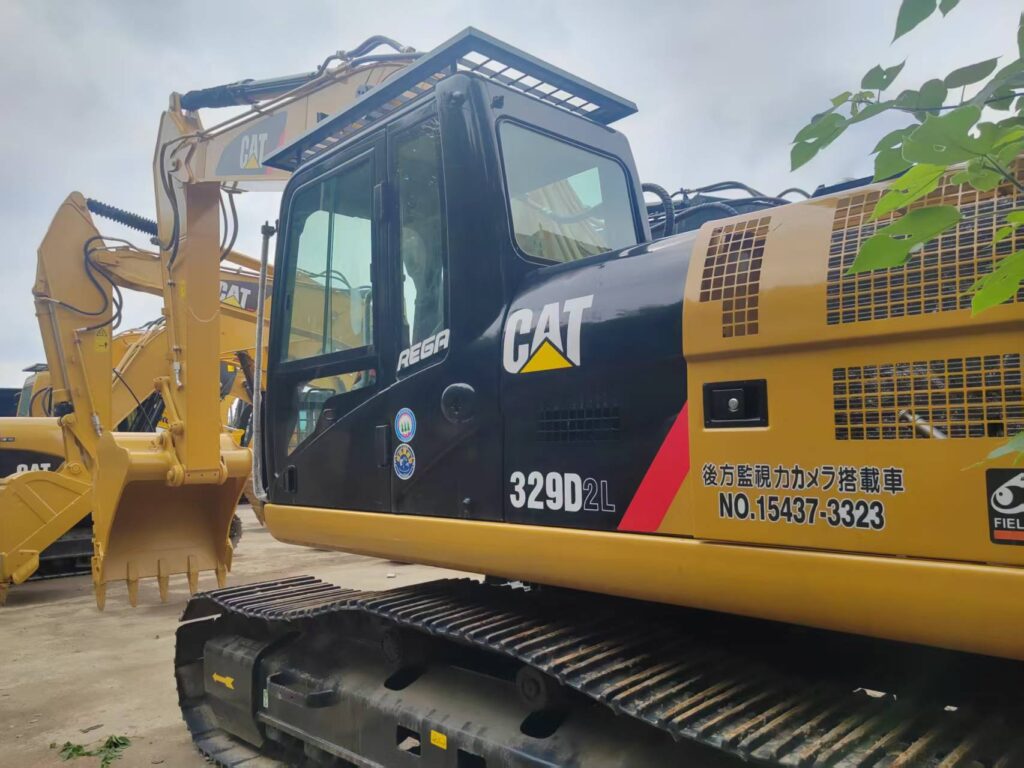
A used Cat excavator can help you add digging capacity without paying the full price of a new machine. It can also become an expensive problem if you focus only on the model year, paint, or hour meter.
You may find two excavators of the same model with nearly identical hours, yet one is ready to work while the other needs an undercarriage, hydraulic repairs, and emissions-system service. The difference often comes down to how the machine was operated, maintained, stored, transported, and repaired.
The market also changes quickly. In May 2026, inventory for used heavy-duty construction equipment in the United States was down 11.55% year over year. Used crawler excavator inventory fell 1.41% month over month, while crawler excavator asking values declined 1.75% during the same month. That combination suggests that your local market may have fewer machines available even when sellers are becoming slightly more flexible on price. [Sandhills Global, May 2026, U.S. used construction equipment market]
EquipmentWatch recorded 12,548 financed used excavator sales in the United States during 2025. Caterpillar represented 3,504 units, or 27.9% of that total. The Cat 320, Cat 336, and Cat 323 were among the most frequently financed used models. [EquipmentWatch, 2026, U.S. financed equipment transactions]
Key takeaway: You do not need to find the cheapest used Cat excavator. You need to find the machine that can complete your work at the lowest realistic cost per productive hour.
For a field-ready inspection sequence, use our used Cat excavator inspection checklist before evaluating a machine.
1. Match the Used Cat Excavator to Your Actual Work
Your first decision is not the price. It is the size and configuration of the excavator. A machine that is too small may spend more hours completing each job. A machine that is too large may require a bigger trailer, additional permits, more fuel, and more space to move safely.
Start by writing down what you expect the excavator to do during a normal week. Include digging depth, trench width, lifting needs, attachment use, site access, soil type, travel distance, and expected operating hours. This prevents an attractive listing from changing your original plan.
| Planning Class | Approximate Weight | Best Everyday Uses | Main Buying Concern |
|---|---|---|---|
| Mini | Under 10 metric tons | Landscaping, utilities, residential work and tight access | Stability, attachment flow and transport limits |
| Small to medium | 10 to 25 metric tons | General contracting, drainage, foundations and roadwork | Hydraulic condition and undercarriage wear |
| Large | 25 to 40 metric tons | Mass excavation, quarry support and heavy utility work | Transport cost, fuel use and component history |
| Production class | Over 40 metric tons | Mining, major earthmoving and high-volume loading | Site logistics, specialized repairs and resale market |
These weight bands are planning ranges rather than specifications for a particular model. Confirm the exact operating weight, tail-swing design, lifting chart, hydraulic flow, digging depth, bucket capacity, and transport dimensions for the machine you are considering.
Think about attachments before choosing a model
A contractor who mainly digs with a bucket has different hydraulic needs from someone who uses a hammer, mulcher, shear, compactor, or rotating grapple. Ask whether the machine has the correct auxiliary hydraulic circuits, return lines, coupler, controls, guards, and cooling capacity.
For example, suppose you buy an excavator for drainage work but later discover that it lacks the plumbing needed for your hydraulic thumb. Installing the necessary lines and controls after purchase can erase part of the money you saved by buying used.
You can review current models, hours, locations, attachments, and dealer listings through the official Cat Used excavator inventory. The filters help you compare machines with similar years and configurations instead of comparing unrelated listings. Prices and availability change, so treat each listing as a current market reference rather than a permanent price guide.
2. Verify the Used Cat Excavator’s Identity and History
A clean machine can still have a complicated history. Before discussing price, photograph the product identification number and compare it with the bill of sale, service records, financing documents, and seller information.
If a plate looks replaced, damaged, repainted, loosely attached, or difficult to read, stop and investigate. Do not rely on a handwritten number in an advertisement. Ask an authorized dealer to confirm the model, serial-number arrangement, original configuration, and available service history.
You should request the following records:
- Maintenance invoices with dates, operating hours, and work performed
- Previous inspection reports and fluid-analysis trends
- Major component repair or replacement records
- Ownership, lien, rental-fleet, and auction documentation
- Records for emissions-system repairs, software updates, and fault codes
- Attachment history, especially hammer, demolition, forestry, or saltwater work
Hours matter, but they do not tell the complete story. A 5,000-hour excavator that received regular service and worked in moderate soil may be a safer purchase than a 2,500-hour machine that spent its life breaking rock or loading abrasive material.
Do the hour meter and physical wear agree?
Look at the seat, pedals, joysticks, door hinges, steps, bucket linkage, boom pins, control labels, and track components. Heavy wear throughout the machine combined with unusually low displayed hours deserves further investigation.
Electronic control modules and connected-machine systems may contain operating information that can help confirm the story. Ask the dealer or inspector to check available electronic records rather than assuming the dashboard number is the only record.
Common confusion: Low hours do not automatically mean low wear. Excessive idling adds engine hours with limited production, while harsh hammer work can create significant structural and hydraulic stress in relatively few hours.
Illustrative mistake story: The low-hour bargain
Imagine that you find a low-hour excavator priced $12,000 below similar machines. The seller says it was used only occasionally. During a proper inspection, however, you notice damaged belly guards, loose boom linkage, a heavily worn coupler, and weld repairs near an attachment bracket. Those signs suggest severe work that the hour meter alone did not reveal.
The lesson is simple: match the machine’s physical condition to the seller’s story. When those two things disagree, keep investigating.
3. Inspect the Undercarriage, Structure, and Digging Group
The undercarriage supports the excavator and absorbs constant contact with soil, stone, mud, slopes, and debris. Wear is normal, but uneven or advanced wear can create a large immediate expense.
Inspect both sides of the machine. Check track shoes, links, pins, bushings, rollers, idlers, sprockets, guards, track tension, and final-drive areas. Look for missing bolts, oil leaks, packed debris, mismatched parts, and uneven wear from side to side.
A freshly washed undercarriage is easier to inspect, but a machine that has just been pressure-washed may temporarily hide slow leaks. After the operational test, park it on clean, dry ground and look again.
Check more than the tracks
Examine the boom, stick, mainframe, carbody, counterweight, bucket, quick coupler, and attachment mounts. Focus on high-stress areas around pin bosses, cylinder mounts, boom-foot areas, guards, and previous welds.
A professional repair is not automatically a reason to reject the machine. The real questions are why the repair was needed, who completed it, what procedure was used, and whether supporting documentation is available.
Cat’s current Certified Used inspection standards require attention to items such as cylinders, hoses, sheet metal, counterweights, glass, lights, undercarriage parts, buckets, and blades. Inspection reports are provided for Cat Certified Used machines. The Cat Certified Used inspection overview shows the condition categories you can use as a model for your own inspection, even when you are considering a non-certified machine.
| Method | Your Time | What It Can Reveal | Risk Level |
|---|---|---|---|
| Remote listing review | 30 to 60 minutes | Obvious mismatches, missing records and unsuitable configuration | High if used alone |
| Onsite walkaround and test | 90 to 150 minutes | Leaks, noise, looseness, poor operation and visible wear | Medium |
| Independent technical inspection | 3 to 5 hours | Measured wear, fault codes, pressures and repair estimates | Lower |
| Certified dealer process | Review report before purchase | Documented condition standards and available protection terms | Lower, but still verify terms |
The times in this table are practical planning estimates. A large excavator, complex attachment package, or machine with incomplete records may require additional time.
Illustrative mistake story: The new-paint distraction
You arrive at a seller’s yard and see polished paint, a clean cab, and new decals. It feels reassuring. Then you look underneath and find sharp sprocket teeth, leaking rollers, uneven track tension, and movement in the bucket linkage.
This is where appearance creates a mental trap. You begin imagining the machine already working for you, so you pay less attention to evidence that could delay the purchase. Fight that reaction by following a written checklist in the same order for every machine.
4. Test the Engine, Hydraulics, Cooling, and Emissions System
Ask the seller not to warm up the excavator before you arrive. A cold start can reveal slow cranking, smoke, unusual noise, injector problems, weak batteries, and difficult starting that may disappear after the engine is warm.
Before starting, inspect fluid levels, engine oil, coolant, hydraulic oil, fuel-water separators, visible filters, hoses, belts, wiring, and the area beneath the machine. Look for oil in coolant, coolant in oil, metal particles, strong fuel smells, and evidence that fluids were changed immediately before the sale.
During operation, bring the machine to normal temperature. Cycle the boom, stick, bucket, swing, travel, blade if equipped, auxiliary hydraulics, and quick coupler. Test combined movements rather than operating only one function at a time. A machine may appear responsive when unloaded but become slow, weak, or noisy when several hydraulic functions demand flow.
Simple operational sequence
- Start the engine cold and record smoke, noise, warning lights, and starting time.
- Warm the machine according to its operating instructions.
- Cycle every function slowly, then at normal working speed.
- Dig, lift, swing, travel, and operate on a safe slope if an appropriate test area is available.
- Check cylinder drift, hydraulic temperature, unusual vibration, and fault messages.
- Park on clean ground, shut down, wait, and inspect for fresh leaks.
Use fluid analysis as evidence, not decoration
A single clean oil sample is helpful, but a series of samples is more valuable because it can show whether contamination or wear metals are increasing. Ask for previous results and note the hours between samples.
Cat states that its laboratories analyze oil, coolant, and diesel fuel and process more than 8 million samples each year. The company also reports that its program supports mixed fleets, with about 25% of samples coming from non-Caterpillar equipment. The Cat S O S fluid-analysis resource explains what can be tested and how trend information supports maintenance decisions.
Success indicator: You want records, operating behavior, electronic data, and fluid results to tell a consistent story. One good result should not be used to dismiss several warning signs.
Understand the emissions configuration
Newer diesel excavators may use exhaust aftertreatment systems such as diesel particulate filters, selective catalytic reduction, diesel exhaust fluid, and related sensors. These systems can reduce emissions, but neglected components can create warning lights, reduced-power conditions, or expensive repairs.
The U.S. Environmental Protection Agency explains that Tier 4 standards apply to nonroad diesel equipment, including excavators. Ultra-low-sulfur diesel used with these systems has a maximum sulfur concentration of 15 parts per million. The EPA heavy-equipment emissions page provides current federal rules and links to the relevant regulations. State or local requirements may be more restrictive.
Ask whether any emissions components have been removed, bypassed, reprogrammed, or replaced with noncompliant parts. A modified machine can create repair, resale, legal, and jobsite-access problems.
Illustrative mistake story: The ignored warning light
Suppose a seller says an emissions warning is “just a sensor.” You accept the explanation because the excavator still operates. A week later, the machine enters reduced-power mode during a time-sensitive project.
The problem was not simply the warning light. The mistake was buying without obtaining the fault codes, service history, diagnostic report, and written repair estimate.
5. Check the Cab, Electronics, Controls, and Safety Features
The cab is not merely a comfort area. It contains the controls, monitor, alarms, visibility systems, safety interlocks, and operator-protection structure you depend on every day.
Test the seat, seat belt, windows, door latch, mirrors, cameras, wipers, lights, horn, travel alarm, heating, air conditioning, monitor, radio, control lockout, emergency controls, and fire extinguisher mount where applicable.
Confirm that every warning light illuminates during the startup check and then turns off as expected. A missing warning light is not necessarily good news. Someone may have removed a bulb, covered an indicator, or cleared a code shortly before your visit.
Confirm installed technology and subscriptions
A listing may mention grade control, payload functions, machine guidance, cameras, remote monitoring, or connected services. Ask exactly what hardware is installed, what software is activated, whether ownership can be transferred, and whether a paid subscription is required.
Also check whether the machine has the controls your operators expect. Pattern selection, joystick response, hydraulic settings, attachment profiles, and camera views can affect productivity and training time.
Common confusion: Installed hardware does not always mean every digital feature is active. Obtain a written list of included technology, licenses, passwords, transfer steps, and recurring charges.
6. Calculate the Real Cost of a Used Cat Excavator
An asking price is only one part of the purchase. Your real cost includes transportation, inspections, immediate repairs, attachments, taxes, financing, maintenance, insurance, storage, fuel, downtime, and eventual resale value.
EquipmentWatch analyzed 419,468 used excavator resale listings covering March 1, 2025, through February 28, 2026. The average listing price was close to $155,000 during the slower winter period and reached about $159,000 in July 2025. Average machine age increased from approximately 7.1 to 7.7 years during the period. These figures cover many brands and excavator sizes, so they are market context, not a price target for a specific Cat model. The EquipmentWatch excavator market report provides the underlying sales, pricing, age, and model data.
Formula 1: Set your maximum offer
Maximum offer = Comparable market value – Immediate repairs – Transport cost – Risk reserve
Comparable market value means the realistic value of similar machines with comparable model years, hours, attachments, condition, and location. Immediate repairs are the items you must complete before normal use. Your risk reserve protects you from uncertainties that the inspection cannot fully remove.
Example:
You find comparable machines at approximately $165,000. Your inspection identifies $12,000 in immediate work. Delivery will cost $3,000, and you want an $8,000 risk reserve.
$165,000 – $12,000 – $3,000 – $8,000 = $142,000 maximum offer
This calculation prevents excitement or fear of missing out from turning a manageable purchase into an overpriced one.
Formula 2: Estimate cost per productive hour
Net machine cost per productive hour = Purchase price + Transport + Immediate repairs + Planned maintenance + Finance cost – Expected resale value, divided by productive hours
Suppose you pay $142,000, spend $3,000 on transport, complete $12,000 in repairs, budget $45,000 for maintenance, and expect $10,000 in financing costs. You expect to sell the machine for $80,000 after receiving 5,000 productive hours of use.
($142,000 + $3,000 + $12,000 + $45,000 + $10,000 – $80,000) ÷ 5,000 = $26.40 per productive hour
This result excludes fuel, labor, insurance, attachments, taxes, and project overhead. Add those costs when comparing ownership with renting or subcontracting.
| Everyday Scenario | Productive Hours | Net Machine Cost | Cost per Hour |
|---|---|---|---|
| Light property and utility work | 4,000 hours | $65,000 | $16.25 |
| General contracting | 6,000 hours | $145,000 | $24.17 |
| Heavy production work | 8,000 hours | $312,000 | $39.00 |
These are calculation examples, not quoted market prices. Your result will change with model size, utilization, financing, repair history, fuel cost, attachment wear, labor practices, and resale conditions.
Three practical ownership situations
Occasional property owner: If you expect only 150 to 250 hours of work each year, renting may remain more practical after you include storage, transport, insurance, and maintenance. Buying makes more sense when you value immediate availability or have recurring work that is difficult to schedule with a rental company.
Small contractor: If the excavator will regularly replace rented equipment or subcontracted work, compare monthly payments with the revenue and rental expense it can realistically replace. Do not assume every hour on the meter is billable.
High-utilization contractor: If downtime can stop several crews or trucks, dealer support, parts availability, monitoring, and backup-machine options may be worth more than a small discount from a distant private seller.
7. Choose the Right Seller, Inspection, and Purchase Terms
You can buy a used Cat excavator from an authorized dealer, rental fleet, equipment company, auction, broker, or private owner. Each path offers a different balance of price, information, support, and risk.
A dealer machine may cost more but could include records, inspection reports, financing options, parts support, and defined protection. A private purchase may offer a lower price, but you may need to arrange your own inspection, lien verification, transport, repairs, and payment protection.
An auction can provide access to many machines in one place, but inspection time may be limited and the final price can include buyer fees, taxes, loading, and transportation. Read every condition of sale before bidding.
Certified does not mean risk-free
Cat Certified Used machines are inspected and serviced to defined standards, and Caterpillar states that certified machines receive protection for at least 12 months or a specified number of operating hours. The exact warranty, covered systems, deductible, exclusions, location limits, and hour limit must be confirmed in your purchase documents.
Ask for written answers to these questions:
- Which components are covered?
- When does coverage begin and expire?
- Is there an operating-hour limit?
- Are travel time, transport, diagnostics, fluids, and labor included?
- Which conditions or applications are excluded?
- Can coverage be transferred if you sell the machine?
Use an independent inspector when the risk is meaningful
An independent inspection is particularly valuable when the excavator is expensive, located far away, sold without records, equipped for severe applications, or purchased through an as-is transaction.
Give the inspector your intended application. A general condition report may not answer whether the machine can safely run your hammer, handle your lifting needs, fit your transport setup, or comply with a restricted jobsite.
Ask for photographs, videos, wear measurements, active and logged fault codes, fluid results, repair estimates, attachment compatibility, and a written explanation of items that could stop production.
Put important promises in writing
A salesperson’s statement is difficult to enforce if it does not appear in the final agreement. Record the exact machine identity, displayed hours, included attachments, installed technology, condition representations, warranty terms, repair commitments, delivery date, payment schedule, and your right to inspect or reject the machine.
Do not send full payment based only on photographs, a text conversation, or an invoice from an unfamiliar account. Confirm the seller, physical location, ownership, banking details, and equipment identity through independent channels.
Use the Excavator Safely After You Buy It
Buying the right machine does not replace safe operating procedures. Your operators need training for the exact excavator, attachment, coupler, site conditions, and task.
OSHA identifies cave-ins, underground services, falling materials, mobile equipment, access, and protective systems among the major concerns in trenching and excavation work. Its trenching and excavation safety resource links to current federal standards, hazard-recognition guidance, and protective-system requirements. State-plan requirements can be different or more stringent.
Complete a documented inspection before work, follow the operation and maintenance manual, verify attachment locking, locate underground utilities, establish swing and travel exclusion zones, and never allow anyone beneath a suspended load or attachment.
A pre-purchase inspection tells you whether the excavator appears suitable on the day you buy it. Daily inspections help you notice what changes after the machine begins working.
Your Final Used Cat Excavator Buying Checklist
Before you sign the purchase agreement, make sure you can answer yes to the following points:
- You selected the machine according to your work, transport limits, attachments, and site access.
- You verified the product identification number, ownership, hour history, maintenance records, and major repairs.
- You inspected the undercarriage, boom, stick, frame, cylinders, bucket linkage, coupler, and previous welds.
- You cold-started the machine and tested every hydraulic, travel, swing, cooling, electrical, and emissions function.
- You reviewed fault codes, fluid-analysis information, installed technology, subscriptions, and safety equipment.
- You calculated a maximum offer and realistic cost per productive hour.
- You obtained an independent inspection and written purchase terms when the financial risk justified them.
Final takeaway: A used Cat excavator should be judged as a working system, not as a model year and an hour number. The engine, hydraulics, undercarriage, structure, electronics, emissions equipment, attachments, records, seller, and purchase terms all affect what the machine will truly cost you.
When you compare machines using the same written process, you remove much of the guesswork. You can recognize a fair deal, walk away from a misleading bargain, and choose an excavator that fits both your jobsite and your budget.
Compare related used road rollers or browse the complete used equipment inventory from NJ Construction Machinery.