

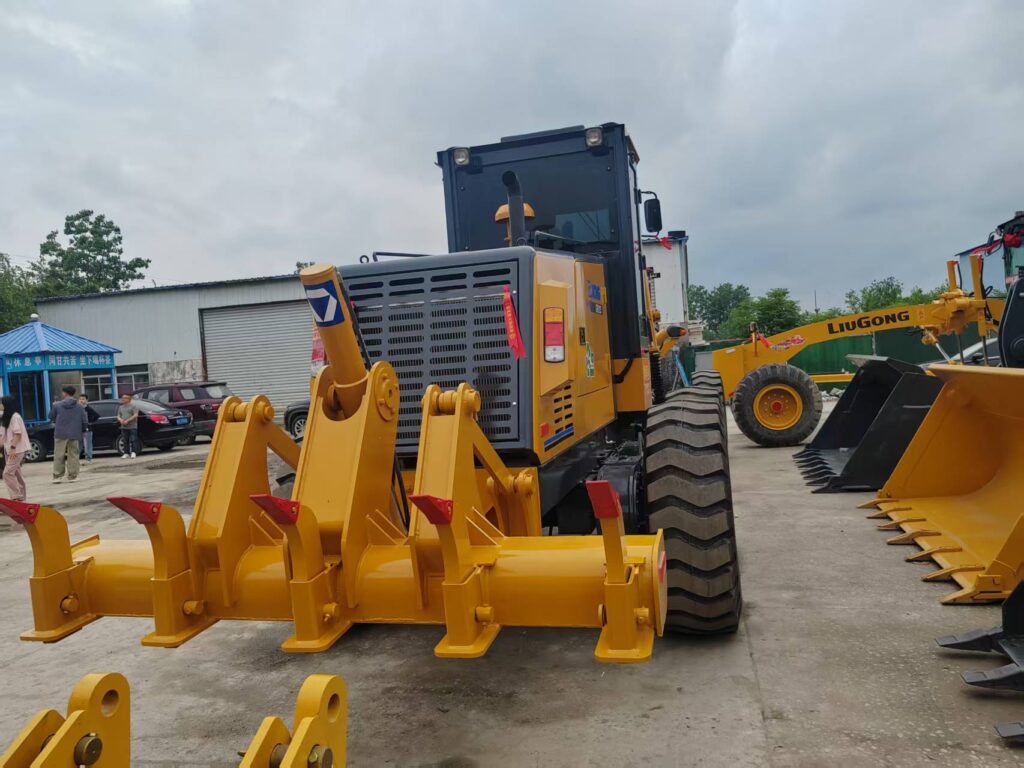
Upon purchasing a used motor grader, the core strategy must be “Comprehensive Inspection, Proper Break-in, and Strict Maintenance.” Due to the unknown history of previous usage, it is critical to focus on hidden wear and oil contamination. Systematic maintenance is required to restore performance and extend service life.
I. In-Depth Inspection Upon Purchase (Critical Steps)
Before deploying the machine for high-intensity operations, a full teardown-level inspection is necessary to prevent operating with existing faults.
- Powertrain System: Check engine oil for metal shavings (indicating cylinder or bearing wear). Test torque converter outlet pressure and oil temperature; if the oil contains a large amount of aluminum particles and the temperature spikes rapidly, this indicates damage to the pump or turbine wheel, requiring disassembly. Check the main clutch disengagement gap (standard approx. 2.5mm) to rule out gear grinding or incomplete disengagement.
- Hydraulic & Work Equipment: Test the main hydraulic pump outlet pressure (typically 18–25 MPa). Inspect the meshing clearance of the circle drive gear; excessive clearance risks breaking the circle arm. Observe if the hydraulic oil is cloudy or emulsified; used equipment often suffers from valve spool sticking due to long-term lack of oil changes.
- Undercarriage & Brakes: Measure tire tread depth (replace if below 3mm) or track sag (standard 30–50mm). Test brake air pressure (normal range 656.6–682.48 kPa) and drain accumulated water from the air reservoir while checking for line leaks.
II. Core System Maintenance and Repair Points
1. Engine System
- Fluid Replacement: Regardless of mileage, immediately replace engine oil, oil filters, fuel filters (primary/fine), and the air filter element upon purchase. Shorten the oil change interval to 250 hours in dusty environments; 500 hours for normal conditions.
- Air Intake Protection: Drain the dust cup daily before operation. Replace the main filter element immediately if the differential pressure is excessive or if damaged; never tap or wash the safety filter element.
- Cooling System: Test coolant freeze point (must be at least 10°C lower than the local minimum temperature). Clean radiator fins to prevent overheating and cylinder scoring.
2. Hydraulic and Transmission System
- Hydraulic Oil Management: Change hydraulic oil every 500 hours or annually. Flush the tank thoroughly during changes to ensure NAS cleanliness grade ≤9. Regularly test oil moisture content (≤0.1%) and acid value.
- Gearbox & Rear Axle: Check gear oil for emulsification (water ingress) or metal particles. Replace with GL-5 heavy-duty gear oil every 500 hours and clean iron filings from magnetic drain plugs.
- Seal Maintenance: Focus on hydraulic cylinder wiper seals; replace immediately if torn to prevent rod scoring. Use high-pressure resistant fluorocarbon rubber for O-rings.
3. Work Equipment and Undercarriage
- Blade Maintenance: Regularly check cutting edge thickness. Replace edges in pairs if wear exceeds 30% of the original thickness or if continuous notches appear, to avoid uneven stress causing bracket deformation.
- Lubrication Standards: Strictly follow the lubrication chart. Grease high-frequency points like blade lift pivots and circle drives every 8 hours. In dusty environments, shorten the lubrication cycle by 30%, greasing until old grease is fully expelled.
- Tires/Tracks: Maintain tire pressure between 2.0–2.5 Bar (adjust for load). Rotate tires regularly to prevent uneven wear. Adjust track tension seasonally: looser in winter, tighter in summer.
III. Quick Troubleshooting Guide
- Torque Converter Overheating: If aluminum particles are present, internal parts are damaged and need repair/replacement. If few particles are found, it is likely motion interference due to machining errors, requiring disassembly and correction.
- Circle Drive Jamming: First, adjust the mesh clearance between the drive pinion and the bull gear. If the circle arm weld breaks, re-weld at the correct relative position and adjust the follow-up valve.
- Brake Failure: Prioritize checking the air reservoir for water and the separator function. Verify brake pressure meets standards. For hydraulic brakes, check brake fluid water content (replace if >3%).
IV. Seasonal and Management Recommendations
- Seasonal Adjustments: Use low-pour-point oil (e.g., 5W-40) and coolant in winter; preheat before starting. In summer, enhance radiator cleaning and monitor hydraulic oil temperature (do not exceed 80°C).
- Record Keeping: Establish a maintenance log recording oil change dates, fault phenomena, and corrective actions to predict component lifespan.
- Operating Standards: Avoid high RPMs when cold; idle for 3–5 minutes until oil pressure stabilizes before loading. Idle before shutdown to cool down and protect the turbocharger.
The value of a used motor grader lies in its cost-effectiveness, but hidden failures carry high costs. It is recommended to perform “Intensive Break-in Maintenance” during the first month of ownership. Treat key wear parts (filters, seals, cutting edges) as consumables and update them promptly to significantly reduce the probability of major overhauls later.
Compare related used motor graders or browse the complete used equipment inventory from NJ Construction Machinery.