

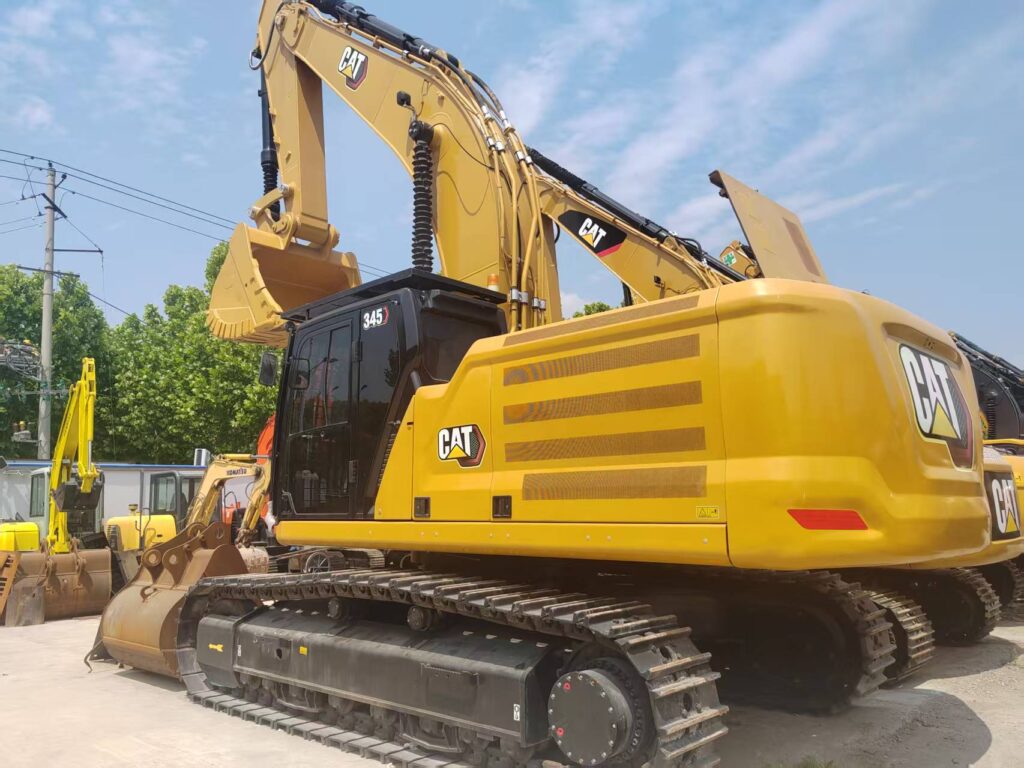
The operation of bulldozers must strictly adhere to the principle of “Inspect First, Operate Safely, No Violations.” The core precautions are as follows:
I. Pre-Operation Inspection & Site Assessment
1. Equipment Static Check
- Verify that engine oil, coolant, and hydraulic fluid levels are normal and free of leaks.
- Check track tension (sag should be between 10–20 mm) and ensure all bolts are tight.
- Test the functionality of brakes, steering, lights, and the horn.
2. Environmental Safety Survey
- Identify the location of underground pipelines and cables; mark them clearly.
- Remove large obstacles from the work area.
- Confirm the slope does not exceed equipment limits (typically ≤10° laterally, ≤30° longitudinally).
- Prohibition: Operation is strictly forbidden at night or during severe weather (heavy rain, dense fog, winds exceeding Force 6).
3. Personnel Qualification & PPE
- Operators must be licensed/certified and wear safety helmets, steel-toed boots, and fitted work clothes. Loose accessories or jewelry are strictly prohibited.
II. Operational Key Standards
1. Starting & Traveling
- Ensure the blade is on the ground and the transmission is in neutral before starting; sound the horn as a warning.
- During travel, keep the blade 40–50 cm above ground.
- Prohibition: Avoid sudden acceleration, hard braking, high-speed sharp turns, and perform pivots only at low speeds.
2. Dozing Techniques
- For hard soil or rocky terrain, use a ripper or blast first. Never ram the blade into immovable objects.
- Use Gear II for standard dozing; switch to Gear I for hard soil or complex terrain. Avoid forcing the blade to one side to prevent frame twisting.
- Do not set excessive digging depth to avoid overloading the engine or causing track slippage.
3. Slope Operation Restrictions
- Uphill: No shifting gears. Downhill: No coasting in neutral; use low gear and engine braking to control speed.
- Cross-slope operation must not exceed 10°. Do not turn or park on steep slopes. If the engine stalls uphill, immediately lower the blade, lock the brake, and then attempt to restart.
- Maintain a distance of at least 2 meters from the edge of a slope crest; never allow the blade to overhang the edge.
III. Prohibited Acts & Safety Red Lines
1. Dangerous Operations
- Overloading is strictly forbidden.
- Do not push dusty materials (lime, ash) or crush rocks with the blade.
- Do not push concrete piles with rebar or walls higher than 2.5 meters.
2. Personnel Safety
- Prohibition: No one may board or disembark while the machine is running, nor stand under the raised blade. Riding is strictly limited to the cab only.
- During maintenance, the engine must be shut off, the blade lowered to the ground and blocked securely. Never work under a suspended blade.
3. Towing & Transfer
- Towing requires a dedicated signal person. For long-distance transfers, use a flatbed trailer. Short-distance travel must not exceed 10 km, and tracks must be lubricated frequently.
IV. Shutdown & Maintenance
1. Standardized Parking
- Park on level, solid ground. Lower the blade to the ground and set the parking brake.
- Run the engine at idle for 3–5 minutes to allow water and oil temperatures to drop before shutting off.
2. Daily Maintenance
- Clean the radiator daily and check track wear/lubrication points.
- Immediately stop operation upon detecting instrument alarms, abnormal noises, or leaks. Never operate a faulty machine.